Architecture
This page is the map. It shows the pictures of the system, the job of each piece in a line, and where to read the detail.
What changes when htrflow runs on many nodes instead of one machine:
| one machine | many nodes | |
|---|---|---|
| where it runs | your machine, its GPU | whichever node has a GPU free, chosen for you |
| the pages | a folder on its disk | fetched from a IIIF manifest or plain image URLs |
| the models | downloaded to that disk | a shared cache every node mounts |
| the results | a folder next to the pages | a bucket every node writes to, read in the browser through a login |
| when a machine fails | you start again | the volume resumes on another node from the bucket |
| how you start it | a command | a file in git |
A volume on these pages is an archival volume, a bound unit of pages with a reference code, never a Kubernetes volume.
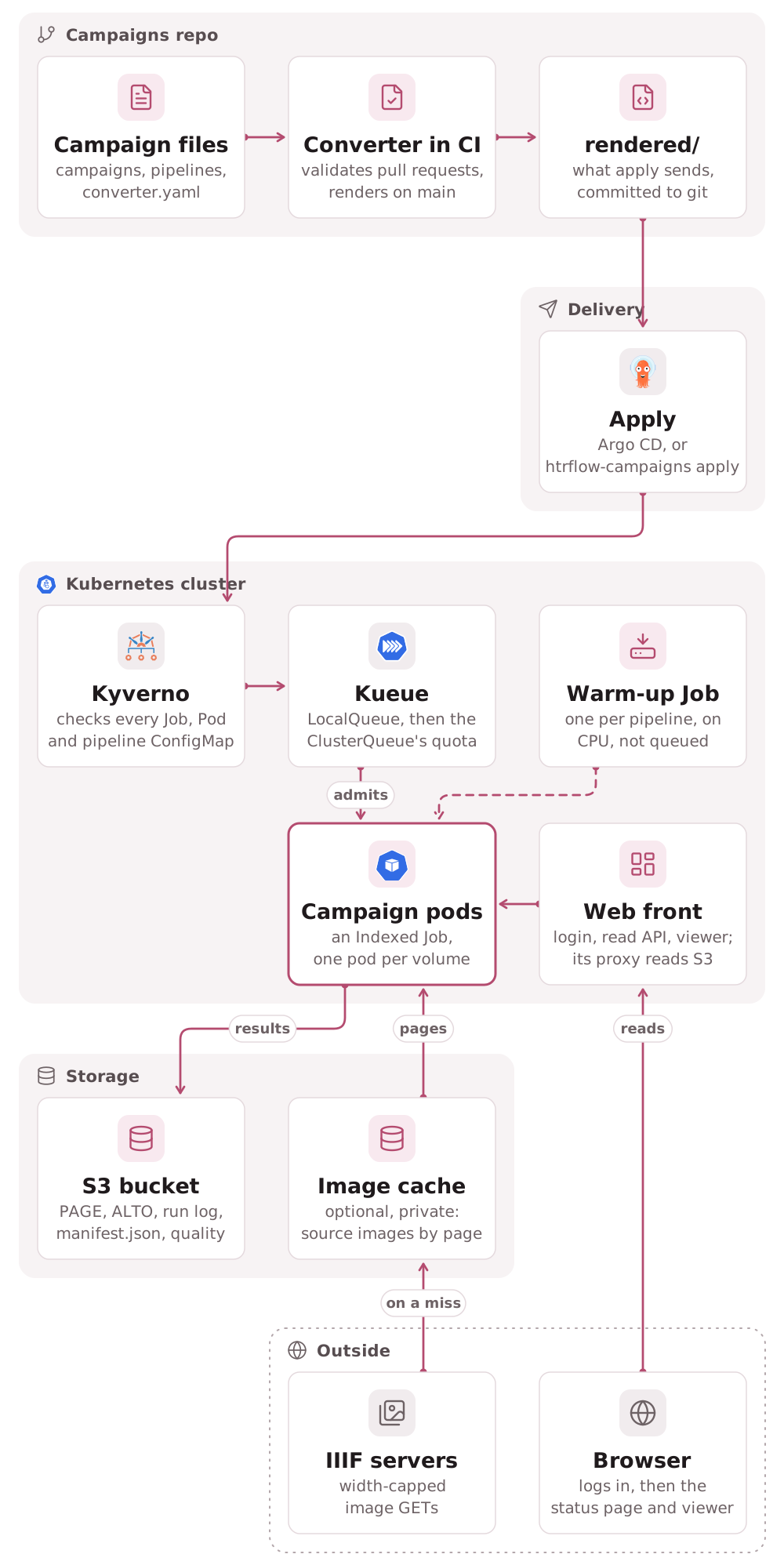
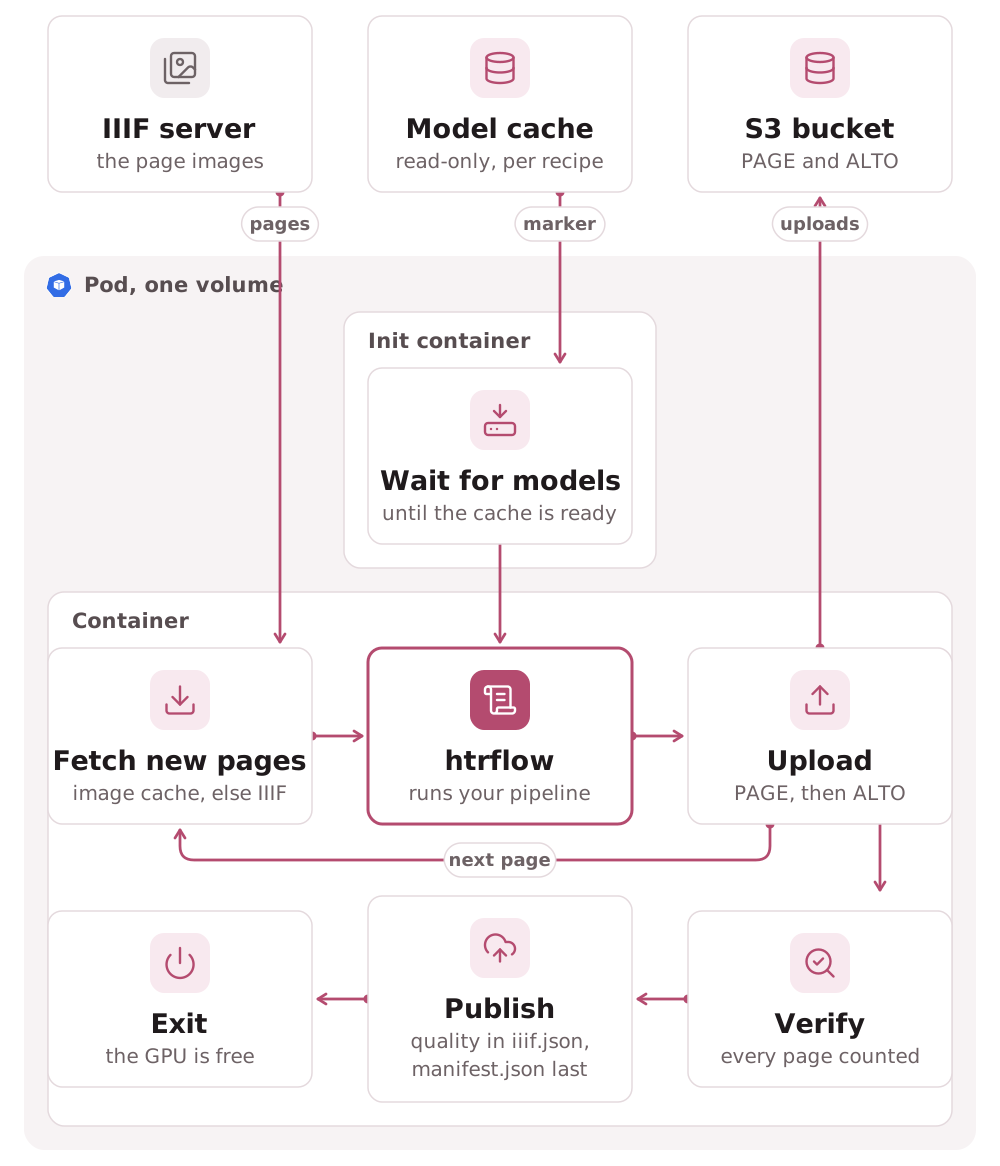
Each piece is deliberately simple:
| Piece | Owns | Does not own |
|---|---|---|
| campaigns repo | Desired state: which volumes, and which pipeline (image digest plus steps) | Anything that runs |
| converter | A pure function from campaign YAML to Kubernetes manifests (packages/converter). The campaigns repo's CI renders and commits them; the apply runs either by hand or in the cluster, as the Argo CD hook's Job on the converter image |
S3, retries, anything the pods do at runtime |
| Kueue | Admission, GPU quota, queue order | Anything about HTR or data |
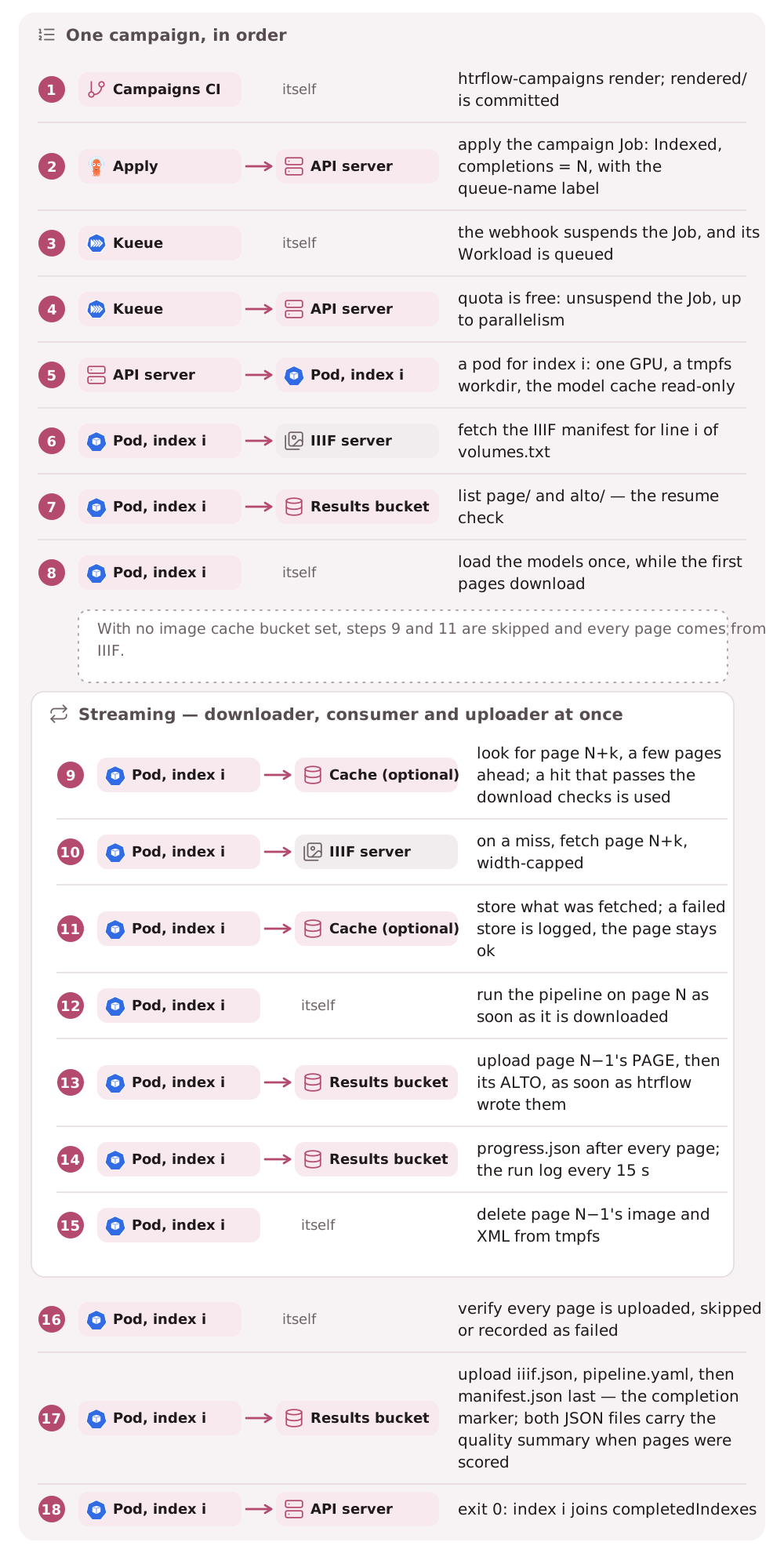
| Indexed Job | The lifecycle of a whole campaign: per-index retries (backoffLimitPerIndex), absorbing disruptions, the exit-13 verdict per index, progress (completedIndexes/failedIndexes) |
HTR, and the results themselves |
| wrapper (streaming driver) | I/O (IIIF in, S3 out), the page queue, resume, output verification, provenance, the live log. Drives htrflow in-process | HTR logic |
| htrflow | HTR | Everything else. It is the unmodified package, driven as a library |
The web front (packages/web) is a passive extra piece: a read-only view of live cluster state and progress.json, whose one write is each campaign's status ConfigMap (Web front & read API).
Components and their boundaries
The table above is the shape of the system. The table below is the contract. For every moving part it lists what the part writes, what it reads, what it emits, and the line it does not cross. To find who wrote a wrong field, look for that field in the "Owns" column.
| Component | Owns (writes) | Inputs | Outputs and signals | Never does |
|---|---|---|---|---|
converter: htrflow-campaigns render/validate (render.py, models.py) |
Every field of the rendered ConfigMaps, warm-up Jobs and campaign Jobs, including the Kueue labels and volumes.txt (Rendered objects) |
campaigns/*.yaml, pipelines/*.yaml, converter.yaml |
rendered/ YAML, one message per validation problem, an exit code |
Touch the cluster, S3 or the network. It is a pure function |
apply: cluster.py |
Server-side apply (field manager htrflow-campaigns), the pause patch on workload.spec.active, the label-selected prune, the one-apply-at-a-time Lease (CLI) |
rendered/, plus a kubeconfig or the hook pod's own token |
Applied objects, pruned: … lines, one sentence per cluster problem |
Render anything, or expect job.spec.suspend to hold (Kueue owns it) |
| Kueue | job.spec.suspend, the whole Workload, quota accounting on the ClusterQueue and LocalQueue |
The queue-name label, the pod template's resource requests, nominalQuota |
Workload conditions (QuotaReserved, Admitted, Finished), events, kueue_* metrics |
Schedule pods, retry an index, or know anything about HTR, IIIF or S3 |
| Kubernetes Job controller | Pods per index, retries under backoffLimitPerIndex, the podFailurePolicy verdicts, status.completedIndexes/failedIndexes/conditions, TTL deletion |
The Job spec, once unsuspended | Pods, Job status and events: the progress the status page reads | Ask Kueue again mid-Job, place pods, or read results |
| kube-scheduler | The node choice. It posts a Binding, and the API server writes pod.spec.nodeName |
The pod spec (requests, runtimeClassName, nodeSelector, tolerations) and node capacity |
The Scheduled event, a bound pod |
Quota, fairness, or ordering between campaigns |
| kubelet | Running the containers, the pod's activeDeadlineSeconds, the stop sequence (SIGTERM at once, SIGKILL terminationGracePeriodSeconds: 120 later), the termination message |
The bound pod, the image, the mounted PVC, ConfigMaps and Secret | Pod phase, exit codes, DeadlineExceeded, pull events |
Retry an index, or decide an index has failed for good |
| warm-up Job | Its recipe's directory of the model cache PVC (<pipeline>-<recipe sha256>, at /data) and the marker /data/warmup/<pipeline>.done in it |
The pipeline ConfigMap, the cache PVC | The marker file, and a {stage: warmup} termination message on failure |
Carry the queue label (so Kueue does not gate it), mount S3, write another recipe's directory, or transcribe |
| wrapper | I/O in both directions, the page queue, resume, output verification, provenance, the live run log. Drives htrflow in-process | Its volumes.txt line at JOB_COMPLETION_INDEX, pipeline.yaml, the S3 secret |
PAGE then ALTO per page, progress.json per page, the run log every 15 s, iiif.json, manifest.json last, exit 0/13/1/143 |
HTR logic, Kubernetes objects, or retrying its own volume |
results proxy: htrflow-results, the web image |
The login, the session cookie, and every read of the bucket for a browser | The session Secret, the S3 Secret's non-secret keys, and the user's own keys from the cookie | /results/… files with sandbox headers, /results/_session |
Write the bucket, hold a bucket credential of its own or a Kubernetes token |
| S3 results bucket | Nothing of its own. It is the only durable record of results | The wrapper's PUTs | What the browser renders, what the read API reports as progress, and what the next attempt resumes from | Get written by the converter, the apply, Kueue or the read API |
read API: packages/web |
Each campaign's status ConfigMap (campaign-<name>-status), by server-side apply |
A namespaced Role: get/list on Jobs and Pods, get/list/create/patch on ConfigMaps; progress.json read through the results proxy with the caller's session |
GET /api/v1/jobs[/…]: phase, counts, per-volume progress, warm-up status, resultsBase |
Write any other object or the bucket, or hold S3 credentials or a session key. It caches progress 5 s for a running volume, an hour for a finished one |
| status page: the SvelteKit front | What the browser shows | /api/v1/jobs, plus the run log and manifest.json from the results proxy, after a login |
Campaign cards and per-volume state | Write anything, anywhere |
viewer: Universal Viewer at /uv.html |
Rendering one volume | iiif.json and ALTO from the results proxy, after a login |
The image plus a text overlay | Talk to the API server or the read API |
| Kyverno | Admission verdicts in the namespace when enabled (all three switches are off by default): pinned images, job shape and RBAC scope; model revisions; image signatures | Every Job and Pod CREATE/UPDATE, the converter-labelled ConfigMaps, and the two service identities' writes | An Enforce rejection naming what is wrong |
Mutate a pod spec, queue anything, or know what a campaign is (Security) |
Job lifecycle
Read next
| Page | Answers |
|---|---|
| Campaigns | The campaigns repo, what the converter renders, the status record, the trade-offs |
| Queueing | When does a campaign run? Kueue's objects, the admission cycle field by field, pause, the window, preemption |
| The Wrapper | The streaming driver and its stages, provenance, the model cache, pipeline configs, memory bounds |
| From image to transcription | One page: the IIIF GET, the htrflow steps, the two XML files, the upload order |
| Failure Handling | Invariants, exit codes, retries, the pod deadline, warm-up failures |
| Events and signals | Everything the system emits, who reads it, what survives the Job's TTL, and the live run log |
| Security | The trust boundary, the results boundary and its login, pod posture, NetworkPolicies |